

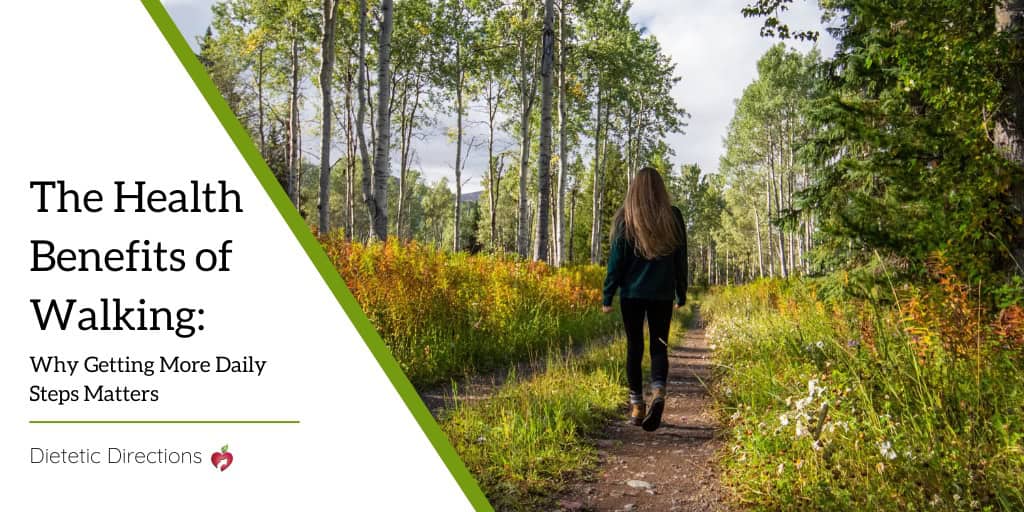
The Health Benefits of Walking: Why Getting More Daily Steps Matters
Walking is one of the simplest and most effective ways to improve your health. The health benefits of walking include better heart health, improved mood, stronger muscles, lower stress and better sleep to name a few. Yet many people live increasingly sedentary lifestyles filled with desk jobs, commuting, and screen time, making it harder to reach healthy daily step counts.

A daily brisk walk is one of the simplest ways to improve your health.
Fortunately, even small increases in movement can make a meaningful difference. In this blog, we explore the health benefits of walking, how many steps you really need each day, and simple strategies to increase your daily movement.
How Many Steps Does the Average Person Get Per Day?
The average North American adult takes approximately 3,000 to 5,000 steps per day, which is considered low activity or sedentary. Lifestyle, infrastructure, and cultural practices influence daily movement patterns, which is why people in different parts of the world may accumulate more steps. For example, adults in Japan average about 7,000 steps per day, while adults in Switzerland average closer to 9,000 steps per day.

The average North American gets about 3,000 to 5,000 steps a day. Sedentary is the “norm.”
How to Interpret Your Daily Steps:
Physical activity is reflected in movement and it’s important to be able to interpret your activity level. Even though people have a vague idea, I think this is important to be honest about daily averages or baseline and decide if getting more daily steps is something you’d like to change.
| Daily Step Count: | Interpretation: |
| Under 5,000 | Sedentary |
| 5,000 – 7,499 | Low active |
| 7,500 – 10,000 | Somewhat active |
| Over 10,000 | Active |
Do I Really Need 10,000 Steps for Health Benefits of Walking?
No, you do not need to hit 10,000 daily steps to reap health benefits. In fact, research published in The Lancet suggests that around 7,000 steps per day is associated with clinically meaningful improvements in health outcomes and may be a more realistic and achievable target for many people. Additionally, research also supports simply increasing even by 500 steps a day leads to health benefits. Therefore, getting steps in to move you from sedentary to low active or somewhat active will improve health. Let’s read on for health benefits with getting those steps up!
For adults over the age of 70, each time you add 500 steps to your daily average, you incrementally lower your cardiovascular disease risk by 14%.
What Are the Health Benefits of Walking?
Science-backed research strongly suggests that increasing your daily steps can lead to meaningful improvements in health and longevity. Some of the numerous clinically significant health benefits include:
- Maintains a healthy weight, can support weight loss and aid in losing body fat
- Increases energy (perfect for fighting that afternoon slump)
- Reduces stress and tension
- Helps prevent or manage various conditions, including heart disease, stroke, high blood pressure and cancer
- Improves sleep quality, duration and the ability to fall asleep faster. Regulates sleep-wake cycles.
- Helps trim the waistline and reduce waist circumference
- Improves mood, reduces anxiety and depression, lowers the risk of type 2 diabetes, and improves blood sugar control
- Improves cardiovascular fitness and walking endurance
- Strengthens bones and muscles
- Improves muscular endurance
- Improves cognition, memory and lowers dementia risk
- Increases your balance and coordination
- Strengthens immune system

Increasing your steps daily significantly improves health and longevity.
Setting a Step Goal:
- Know your average daily step count or baseline. Decide if walking more is something you want to commit to and you can remind yourself of specific benefits/reasons that resonate with you.
- Increase your daily steps in meaningful and doable ways! This can be big or small depending on your preference and lifestyle. For example, some find it enjoyable to add steps into your routine like taking the stairs at the office or walking for 20-30 minutes during a lunch break.
- Be specific and hold yourself accountable. Make a goal that you can put in your calendar and commit to it as you would a meeting. Put a checkmark on the calendar event once completed. This actives reward centres in the brain.
- Aim for consistency. Keeping consistent will be the biggest determinant of long-term success. After all you can always advance or level up, but we often discount our efforts by not showing up instead of focusing on consistency above duration. Perhaps you do a 10 minute walk instead of 20 or 30 minutes, at least you were consistent in getting it in.
- “No ego amigo.” This means don’t let an inner critic dissuade you from continuing. Do the best you can. If you want to get more steps in you can! Do what you can today, it makes a difference.
Dietitian Advice: The Canadian Health Guidelines of 150 + minutes of moderate to vigorous aerobic activity sounds confusing to many. How about 30 minutes of walking five times a week? That could be broken into two 15 minute bursts. Set goals that make sense to you!
7 Ways to Get more Steps in:
1. Set a Daily Step Target
This will help you have a focus of where you want to go and know when you reach this. Wearing a pedometer to bring awareness to daily steps and many find wearing a device (as inexpensive as $5) can motivate movement to hit targets. There’s also wearable jewelry like smart rings to track steps as well. Note: If you don’t want to wear a device – no problem. You can increase steps simply by changing your routine(s) and moving more.

A smart watch can be a motivator to hit step targets or a reminder to get up and move more!
2. Get Specific
Start with a simple goal, such as, “I’ll take a 5 or 10-minute walk during my lunch break.” When your 5 or 10-minute walk becomes a habit, set a new bigger goal, such as, “I’ll walk for 20 minutes at lunch.” Find specific times for walks that work best for your energy and schedule. Soon you could be reaching for goals that once seemed impossible.
3. Make it Sociable & Entertaining.
Go outside with a friend, call a friend, arrange to take a meeting over the phone while you’re crushing your daily steps. Try listening to a podcast to learn something new, get caught up with the news, or perhaps my favourite, inspirational content for personal development and brain stimulation. Take the time for you! Fill your bucket with self-care.

4. Try a Walking Pad
These can be stored easily since not large like traditional treadmill. Takes out the “weather excuse” for a walk and ideal to use late at night while watching your favourite show. My husband loves hitting his daily steps when watching a show. These walking pads can be convenient sleek options around $200 to invest in your health.
5. Take the Stairs as a General Rule
This is a great habit to get in to especially if you’re physically able, and not trying to get to the top of a really tall building! You could always start with the stairs and take the elevator for the reminder when you’re tired.

6. Reward Yourself
Give yourself a high five, try jumping up and down or sharing your progress with a trusted friend. This helps your brain remember walking as a meaningful habit you want to keep up.
7. Notice Internal Benefits
Perhaps you feel more energy, less sluggish, better mental focus, lower anxiety/stress, trimmer middle section, better blood sugars, etc. These benefits will help solidify your walking habit. And finally, if you find yourself missing your walks, remind yourself of the reasons you want to move more and get back on track!
How Many Calories Burned in 10,000 Steps?
This is a popular question. Walking 10,000 steps typically burns between 300 and 600 calories, with an average of around 400–500 calories depending on body weight, walking speed, and terrain. This calorie burn supports weight loss if this is a goal or can support weight maintenance as long as sufficient calories are consumed. Keep in mind that the health benefits are a big benefit and not merely a calorie burning tool.

It isn’t necessary to aim for 10,000 steps, try adding one or two walks per day to benefit your health.
Can 10,000 Steps Help with Weight Loss?
A 2019 study published in Obesity found that adults who lost over 10% of their body weight over 18 months typically accumulated 10,000 + daily steps. Of these, about 3,500 steps were in moderate-to-vigorous 10-minute bouts on a walk. This behavior, combined with calorie restriction, supports long-term weight management and health improvements. Be sure to read our science-backed blog on the role of protein in weight loss and appetite regulation.

Steps are important and protein is key in a weight loss journey. Learn why!
How Many Steps Can You Walk in 10 Minutes?
Most people walk about 1,000 steps in 10 minutes at a moderate intensity. Thankfully, this allows for really easy math and makes it easy to estimate how much additional walking you need to reach your step goals. If you need to get 2,000 more steps a day – you’ll need to add a 20 minute walk. Are you short on time? Walk faster and you’ll get more steps in less time!
DYK: Most people walk ~ 1,000 steps in 10 minutes.
A 20-30 minute walk = 2,000 – 3,000 steps, which
is enough for most people to hit their step target!
How to Increase the Intensity of Your Walks
It is completely false that walking is easy and effortless. It takes WORK and engages many muscles and internal systems in the body. Remember that the health benefits of walking can be better accessed if it’s enjoyable so you stick with it.

Add variations in terrain and inclines to your daily walk to increase intensity and challenge.
However, if you want to make walks more challenging, try going faster, farther and more frequently. For example, if you have worked your daily step count up and still want an added challenge, you can increase your step target by 1,000. If this new goal feels appropriate, you can stop there. Additionally, you might try walking faster (power walking), varying your terrain with trails or inclines and/or implementing interval spurts. This can be a great way to get aerobic activity, improve your heart health and increase your endurance while burning calories. Wearing a weighted vest is another increasing trend for greater challenge. The weight of the vest can also be increased as tolerated. The most important thing is to ensure your walks stay fun and enjoyable so they are consistently taken.
Is Walking 30 Minutes a Day Enough Exercise?
Yes. Research supports that walking for 30 minutes most days of the week is enough to enhance cardiovascular health, reduce excess body fat, and strengthen bones while also enhancing muscle endurance and strength. It can also lessen your risk of developing conditions like heart disease, type 2 diabetes, osteoporosis, and various cancers. This amount also meets the Canadian physical activity guideline of 150 minutes of moderate activity per week and provides significant health benefits.
Bottom Line:
Walking is one of the simplest ways to boost your health while enjoying numerous physical, mental, and emotional benefits. It’s also inexpensive and effective. Activities that help reduce stress, improve sleep, boost mood, and support long-term health are worth prioritizing.
Walking outdoors—especially in nature and sunlight—can further improve mood while helping you stay active. Our bodies were designed to move, not spend most of the day sitting in a car or at a desk.

Start where you are today and gradually increase your movement to reap those health benefits of walking. Aim for it to feel enjoyable and realistic for your lifestyle. Additionally, keep the focus on increasing your current daily average. Remember that every additional 500 steps helps. With consistency, those daily steps can lead to lasting health benefits.
Related Topics

Andrea D'Ambrosio is a Registered Dietitian, health-enthusiast and adoring foodie. She started Dietetic Directions as a way to share science-based information mixed with inspirational content for lifelong change.
Book a Dietitian ConsultationRelated Recipes




Hi! I’m Andrea,
Dietitian, health-enthusiast and an adoring foodie. I started Dietetic Directions as a way to share science-based information mixed with inspirational content for lifelong change. I’m all about eating well and loving life.
Know More About Me