

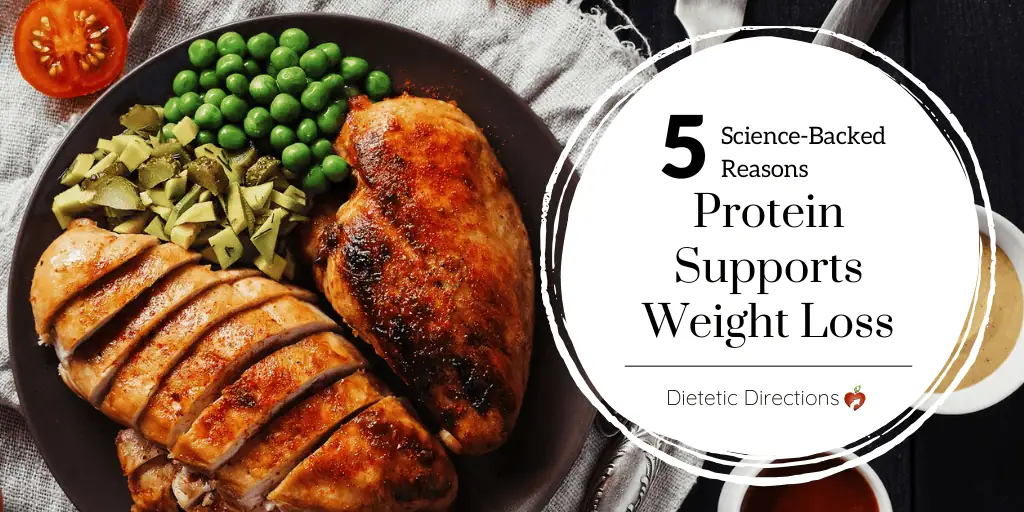
5 Science-Backed Reasons Protein Supports Weight Loss
Protein is a key driver of weight loss and an essential component of overall health. Strong scientific evidence shows that increasing protein intake above the North American average intake of ~17% of calories (approximately 80 grams of protein per day) is associated with meaningful improvements in metabolic health. These include better blood sugar control, lower triglycerides, blood pressure, and improved body composition such as reductions in body weight, percent body fat, visceral fat, and waist-to-hip ratio. As a Registered Dietitian, I’m sharing my top 5 science-backed reasons protein supports weight loss, along with practical guidance to help you reach your personal health goals.

Looking to optimize your dietary habits for weight loss? Ensuring adequate protein deserves its rightful place at your metaphorical plate.
As a Registered Dietitian with over 15 years of experience counselling clients and reviewing the literature on dietary intake patterns, I know it can be challenging to both lose weight and hit higher protein targets. Nevertheless, the evidence supporting protein’s role in weight loss is growing, and it’s worth understanding why so you can make some changes.
Myth Debunked: Increasing protein does not harm bone density or kidney function in healthy adults.
(Source:Tay et al., 2024)
5 Ways Protein Supports Weight Loss (Backed by Science)
1. How Protein Supports Weight Loss Through Appetite Control
Protein supports satiety/fullness by slowing stomach emptying and lowering ghrelin, the hunger hormone. At the same time, it boosts GLP-1 and PYY, hormones that signal the brain to feel full.
Protein changes our brain chemistry and boosts hormones (like GLP-1) that tell us we are full.
Studies on leptin — the so-called “fullness hormone” — also show greater brain sensitivity on higher-protein diets, helping reduce appetite. Therefore, this means you can fuel yourself adequately without overeating or constantly craving snacks.
Higher protein diets increase GLP-1 and PYY while lowering ghrelin to help you naturally eat less.
2. Protein Helps Reduce Calories Without Restriction
Research published in the American Journal of Clinical Nutrition found that increasing protein from 15% → 30% of total calories, while keeping carbohydrate intake constant, led participants to naturally eat approximately 440 fewer calories per day.
Over three months, this resulted in the following:
- ~5 kg (11 lbs) weight loss
- ~3.7 kg (8 lbs) fat loss
- Reduced BMI and waist-to-hip ratio
These effects occurred without intentional calorie restriction, showing that higher protein intake reduces appetite and spontaneous caloric intake.
Dietitian’s insight: This study demonstrates that the weight loss benefits of low-carb diets may actually be due to the increased protein, rather than lower carbohydrates — an important takeaway for meal planning.
Ready to improve your health?
Practical tip: Working with a Registered Dietitian to set specific macronutrient targets ensures you are meeting protein needs for optimal weight and/or fat loss without feeling deprived.
3. Protein Burns More Calories Just by Being Digested
The thermic effect of food (TEF) is the energy your body uses to digest and metabolize nutrients. Protein has a much higher TEF (20–30%) compared to carbohydrates (5–10%) and fat (0–3%).
This means that consuming 100 calories of protein (e.g., chicken, salmon, tofu) results in only ~70 usable calories — giving you an extra calorie-burning bonus for weight loss. So be sure that protein takes up it’s rightful place on your plate!

Try our Sheet Pan Chicken Sweet Potato and Cauliflower recipe.
Did you know? Protein requires more energy to digest, metabolize, and absorb, which is another way it naturally supports calorie balance for weight loss.
Moon, J., & Koh, G. (2020).
4. Protein Helps Maintain and Build Muscle
During weight loss, it’s common to lose muscle along with fat mass. This can slow metabolism, making it harder to continue losing weight. However, protein provides the amino acids needed for muscle protein synthesis and, when combined with resistance training, higher protein diets support better muscle preservation and growth.

Protecting muscle ensures fat loss, not muscle loss, and keeps metabolism functioning optimally.
Research shows that:
- Higher daily protein intake is associated with better preservation or gains in lean body mass, especially when paired with strength training.
- Older adults benefit from higher protein to prevent sarcopenia (muscle loss).
- Plant-based diets require higher total protein per meal due to lower protein quality.
Practical Tip: To maintain or build lean/muscle mass, it is recommended to do resistance exercise at least
2x per week.
5. Protein Supports Weight Loss & Prevents Regain
A recent systematic review and meta-analysis of 15 RCTs (~2,900 participants) showed that higher protein diets are linked to the following:
- Significant weight and fat loss
- Reduced waist-to-hip ratio
- Lower fasting blood sugar
- Reduced inflammation and triglycerides
- Improved blood pressure

Additionally, beyond weight loss, research shows that maintaining higher protein intake helps prevent weight regain, making it a powerful tool for long-term health.
Bonus: Protein increases GLP-1 naturally — the same hormone targeted by weight-loss drugs like Ozempic — helping control/lower appetite and improve insulin response (resulting in better blood sugar control.)
Studies also show that higher protein diets:
- Improve insulin sensitivity and glycemic variability compared to Mediterranean diets.
- Support pre-diabetes remission when protein intake is increased to 30% of calories.
- Enhance glucose metabolism through branched-chain amino acids (like leucine) signaling in the hypothalamus.
- Improve sleep apnea, sleep quality.
Protein not only helps you lose weight but also improves metabolic health and reduces risk for conditions like type 2 diabetes and heart disease.
Lesgards, J.-F. (2023).
Practical Tips to Implement a High-Protein Diet
- Speak with a dietitian (Meet our team!) to find out your individualized protein gram targets to meet your health needs.
- Include high-quality protein sources at each meal: chicken, fish, egg/whites, dairy, soy and tofu, seitan, TVP, etc.
- Combine a protein-rich, nutritionally balanced diet with resistance/strength training to preserve/build lean/muscle mass.
- Utilize meal planning to prep ahead and save time on meals that hit your protein targets and weight loss goals.

Bottom Line:
Protein is a weight-loss powerhouse. It reduces appetite, increases calorie burn, preserves muscle mass, improves blood sugar control, and helps maintain results in the long term. In my professional opinion as a dietitian, prioritizing sufficient protein at every meal is one of the most effective ways to support your health and weight loss goals naturally. So enjoy your foods and check our recipe database for inspiration!
Related Topics

Andrea D'Ambrosio is a Registered Dietitian, health-enthusiast and adoring foodie. She started Dietetic Directions as a way to share science-based information mixed with inspirational content for lifelong change.
Book a Dietitian ConsultationRelated Recipes

Hi! I’m Andrea,
Dietitian, health-enthusiast and an adoring foodie. I started Dietetic Directions as a way to share science-based information mixed with inspirational content for lifelong change. I’m all about eating well and loving life.
Know More About Me