

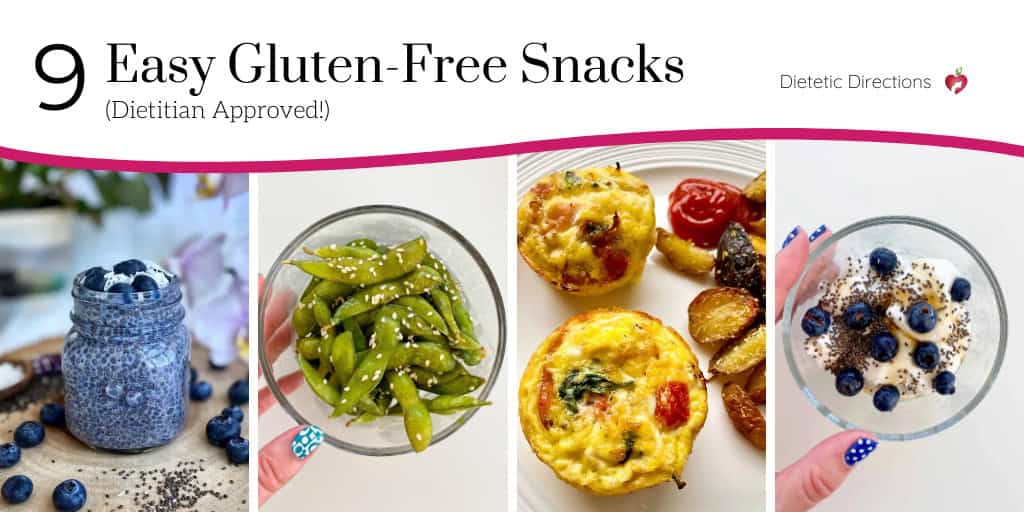
9 Easy Gluten-Free Snacks (Dietitian Approved)
Gluten-free snacks are essential for those following a restricted diet. Whether you’ve been diagnosed with celiac disease, gluten sensitivity, or are limiting gluten as part of a Low FODMAP diet for Irritable Bowel Syndrome, snacks can help fuel you between meals.
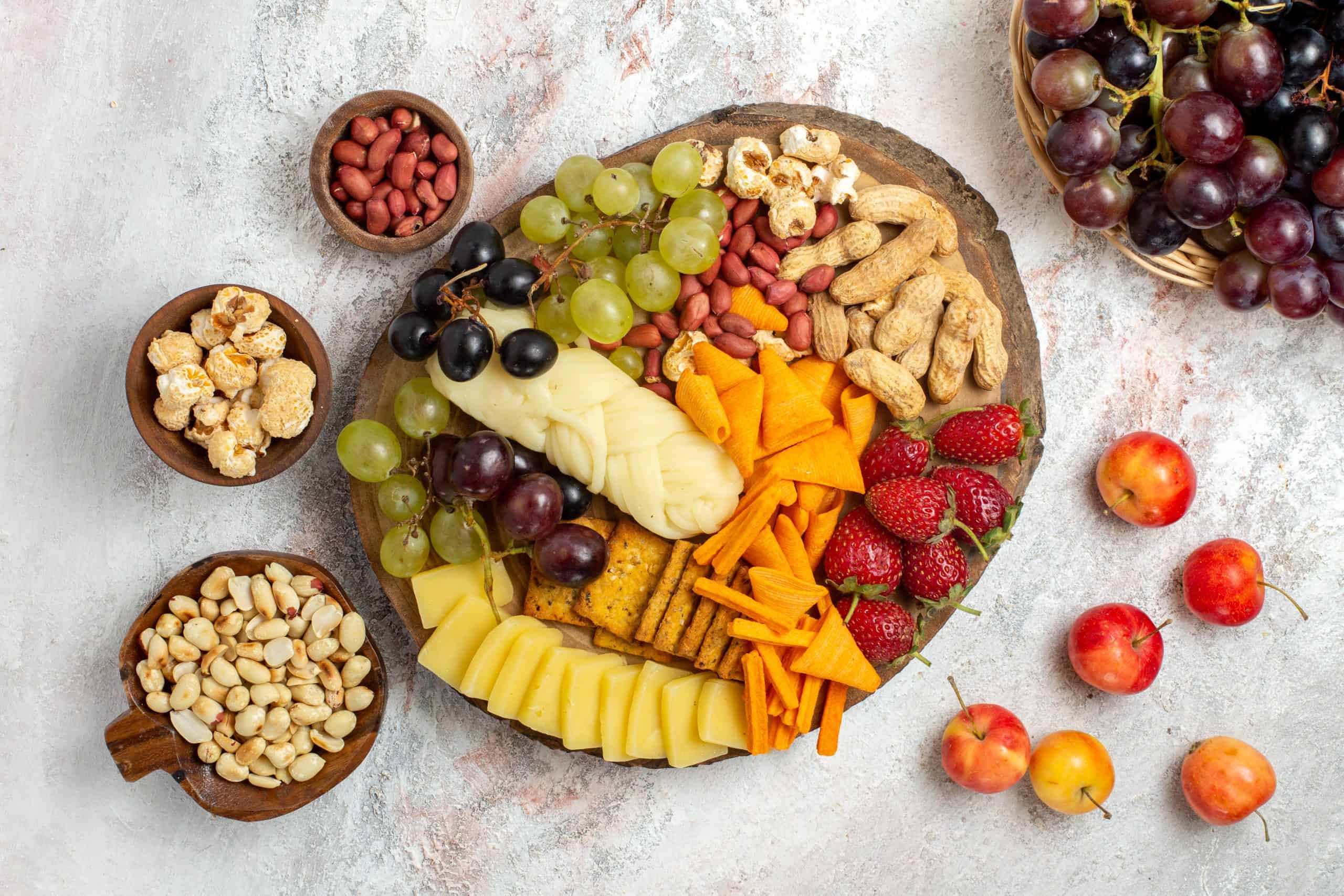
Follow along for my top dietitian tips on preparing easy, nourishing gluten-free snacks.
As a dietitian and mom, I know how important it is to have nourishing, ready-to-go options for little ones, hungry teens, and busy adults alike. In today’s blog, I’m sharing my top tips for easy, well-balanced, make-ahead and gluten-free snacks to keep you energized. Let’s dig into my top 9 dietitian-approved, delicious, and convenient gluten-free snacks!
How Smart Gluten-Free Snacks Improve Health
- Prevent extreme hunger. Planning balanced snacks helps avoid impulsive convenience choices later. Also, a regulated appetite makes it easier to stick to portions and feel in control.
- Boost energy and focus. Choosing balanced snacks supports physical activity, mental performance, and mood throughout the day.
- Increase protein and fibre intake. Snacks are an opportunity to boost key nutrients that support fullness, muscle health, digestion, and overall wellness.
3 Types of Gluten-Free Snacks
1. Filling Snacks
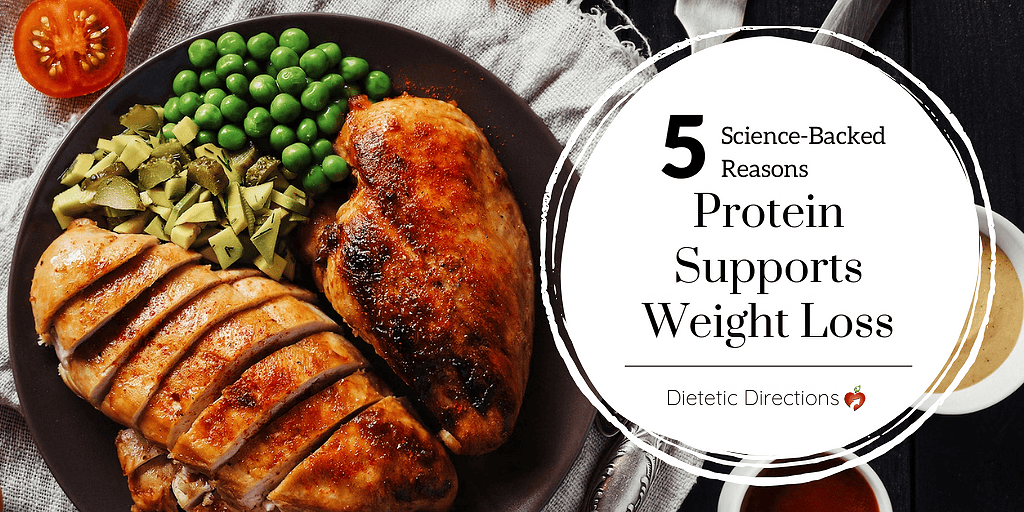
These snacks will ALWAYS pack a significant protein punch and include adequate carbohydrates and/or fibre for sustained energy and fullness. Healthy fats also contribute to satiety/fullness by slowing digestion. Discover how protein helps regulate appetite by reducing hunger hormones and increasing fullness. Check out how increasing protein can support weight management and metabolic health in our science-backed blog.
2. Small Snacks
If you need a quick boost before your commute, during errands, or between activities, a smaller snack can help bridge the gap. These options may be lighter in calories but should still include both carbohydrate (for energy and blood sugar support) and protein (for added fullness).
3. Crunchy, Lower-Calorie Options
Sometimes you just want something to munch on. Low-calorie, nutrient-dense choices like raw veggies can increase micronutrient intake without significantly increasing calories. For example, pair carrots, cucumbers, or peppers with a simple homemade tzatziki made from Greek yogurt, lemon, and garlic.
Dietitian Snacking Tip:
Be mindful of whether you’re snacking because you’re truly hungry or simply out of habit. Plan convenient options and enjoy them when you feel a slight rumble — think of it as putting “gas in the tank” before your next meal.
Andrea’s Top 9 Gluten-Free Snacks
Each of these pairs a protein source with a carbohydrate for balanced energy. Many are naturally rich in fibre, and some also provide healthy fats to enhance fullness.
1. Roasted Chickpeas
One cup of chickpeas provides approximately 200 calories, 10 grams of protein, and 10 grams of fibre — a very satisfying combination. Roast ahead with sweet or savoury spices and portion into containers for easy grab-and-go snacks.
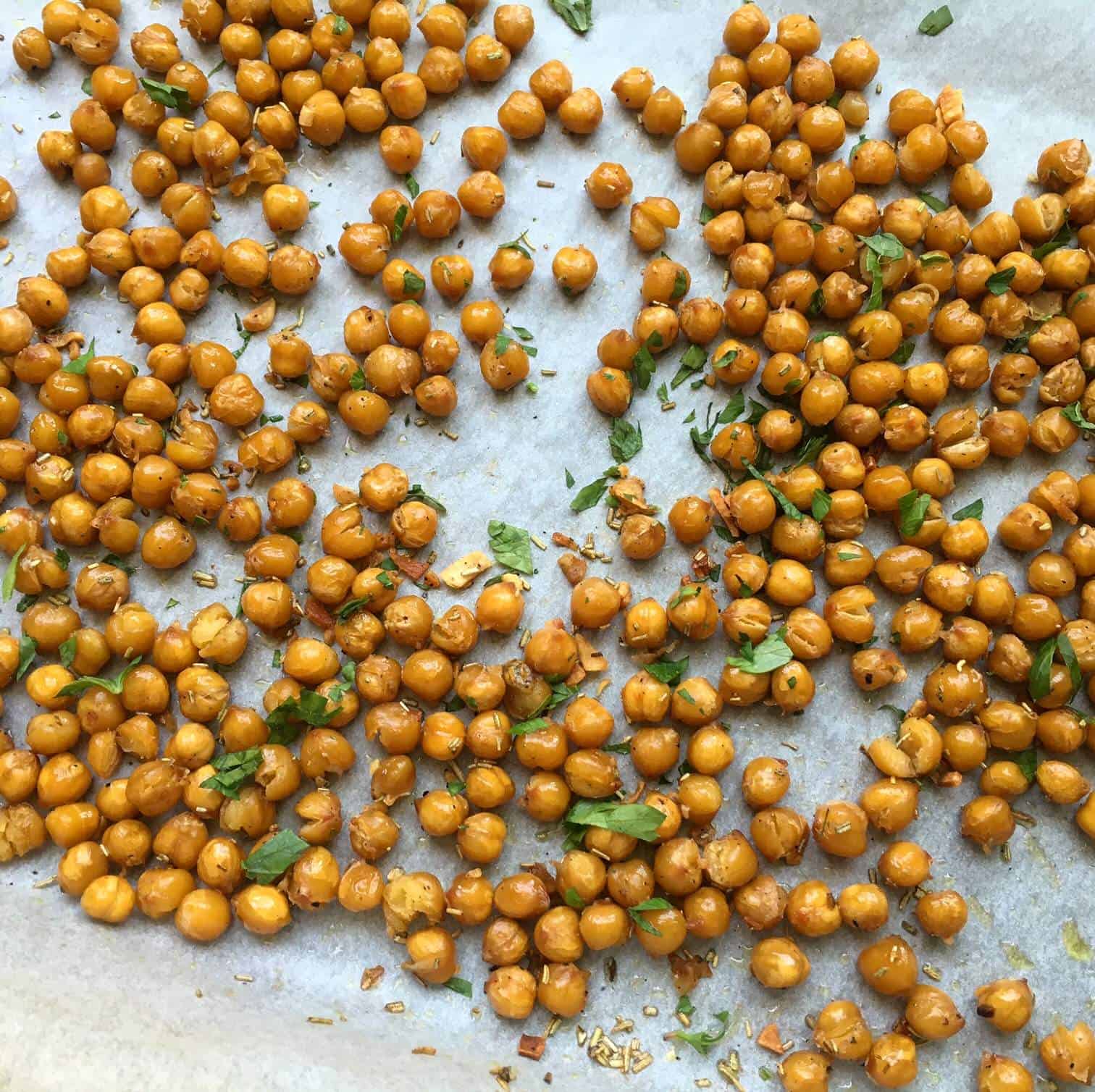
Enjoy warm savoury Rosemary Roasted Chickpeas as a snack or a flavour-packed addition to meals!
2. Greek Yogurt Parfait
A versatile favourite! Use Greek yogurt or Skyr with fresh or frozen berries. Add chia seeds, hemp hearts, nuts, or seeds for texture and fibre. For an added protein boost, mix in protein powder. Choose lactose-free Greek yogurt if lactose intolerance is a concern, which can be common in newly diagnosed celiacs. Also, the reason I love Greek or Skyr yogurt is because it has double the protein of regular yogurt.
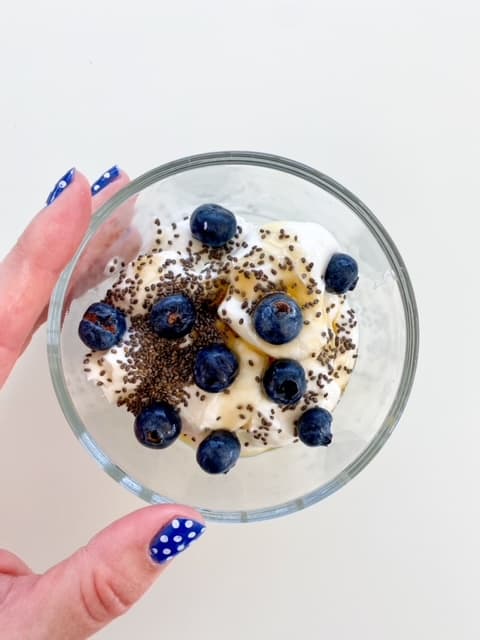
Skyr is a thick, creamy yogurt that pairs perfectly with fruits and chia seeds for gluten-free snacking!
3. Gluten-Free Charcuterie Snack Board
Choose gluten-free rice crackers, pretzels, popcorn, rice cakes, or seed-based crackers. Pair with sliced meats, leftover cooked proteins, cheese, nuts, fruits, and fresh vegetables for colour and nutrients. However, be sure to adjust portion for your snacking needs.
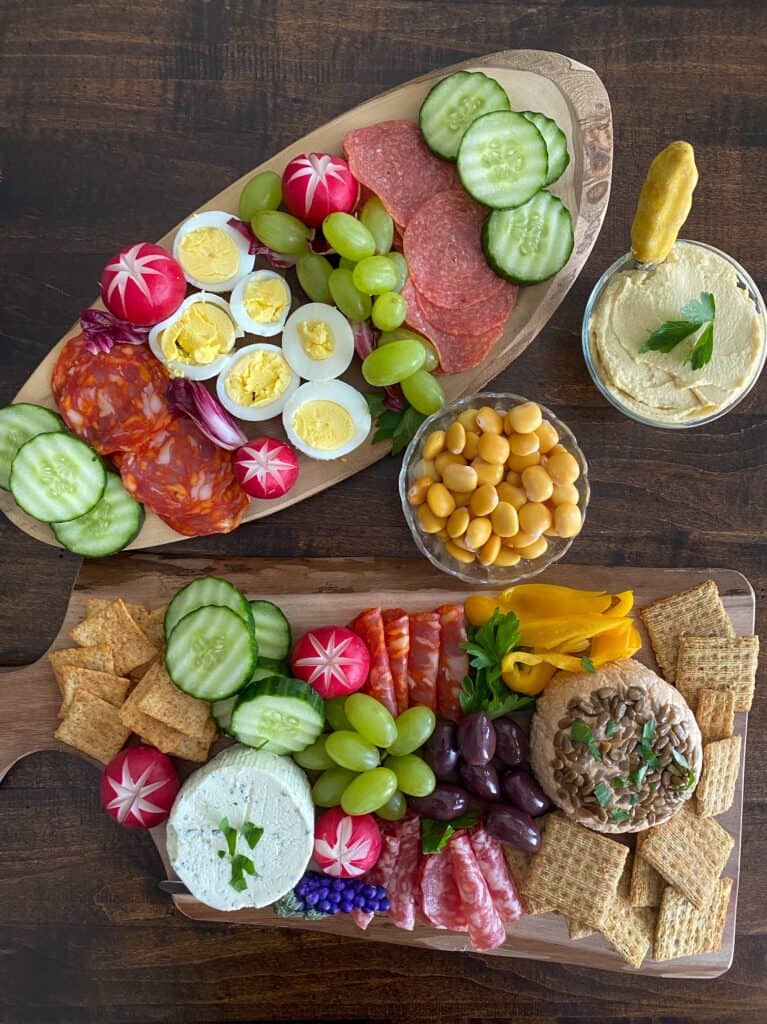
Check out our Lunch Charcuterie Board for a tantalizing and colourful meal inspiration!
4. Energy Bites
Make-ahead energy bites combine carbohydrates, fibre, healthy fats, and protein in one convenient ball. Store in the freezer and thaw as needed. But be sure to use certified gluten-free oats if you have celiac disease.
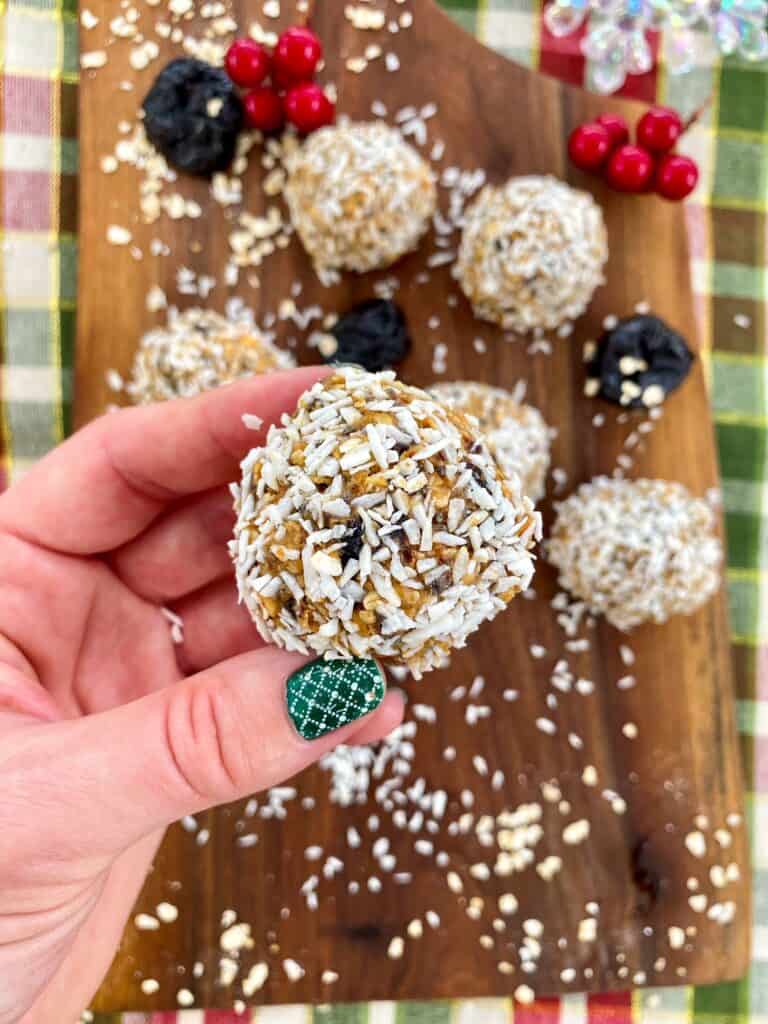
Peanut Butter Oat Bites can be prepped ahead for a convenient gluten-free snack.
5. Mini Egg Muffins
Prepare ahead and store in the fridge (up to 4 days) or freezer. Fill with vegetables, cheese, and lean meats. Egg whites can be used for a higher-protein, lower-calorie option, or use whole eggs for added nutrients like choline. Pair with fruit or potatoes for added carbohydrate energy.
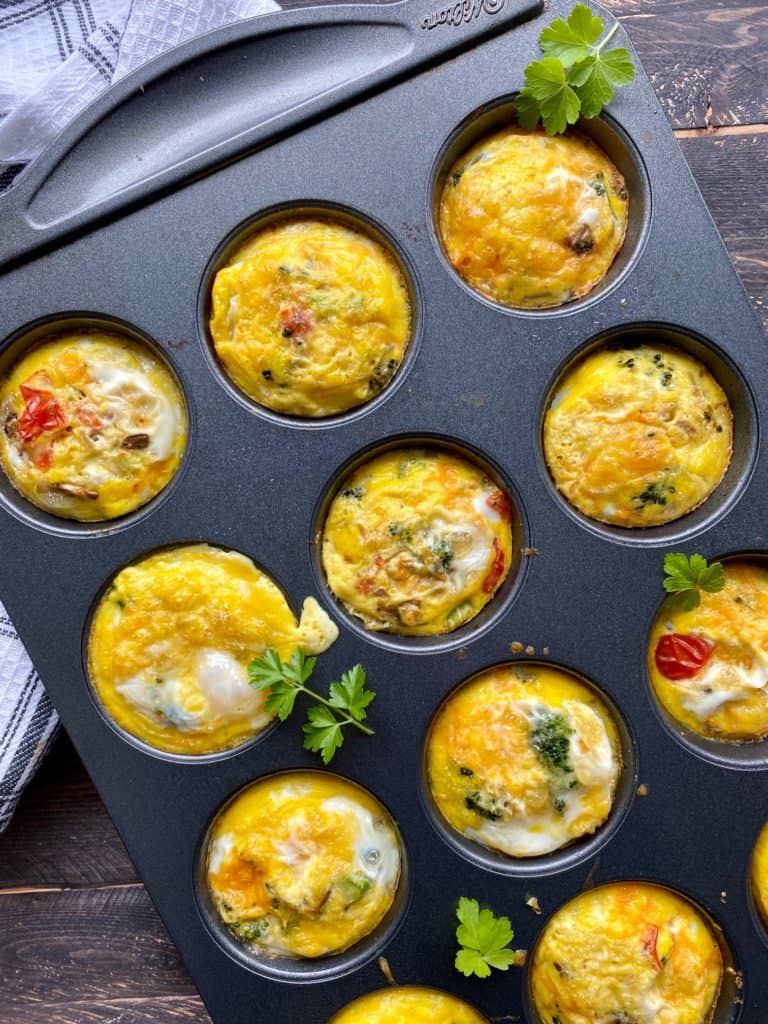
Clean out your fridge with these Mini Egg Muffins, and customize them with your favourite toppings!
6. Chia Pudding
A family-friendly, make-ahead option. Use a higher-protein milk if desired or add protein powder to increase satiety. Additionally, top with frozen fruit for natural sweetness and fibre.
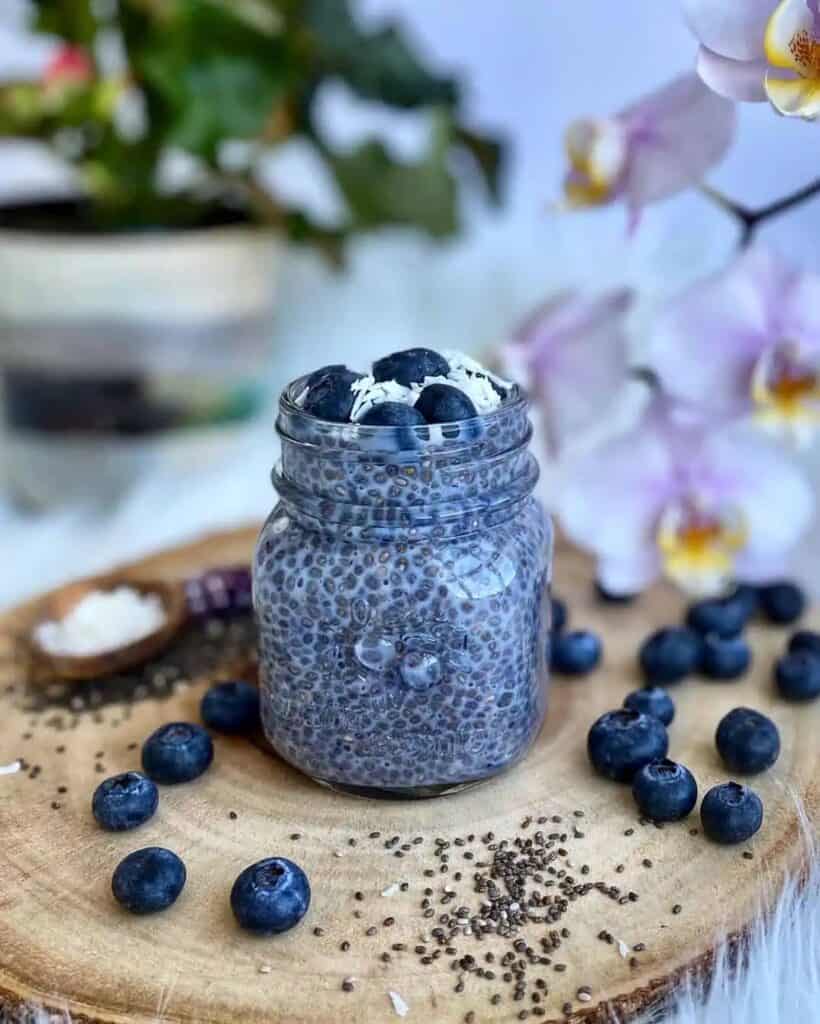
Try our Blueberry Chia Seed Pudding for a cost-effective, high-protein, gluten-free snack.
7. Edamame with Salt
Edamame is a powerhouse legume snack. One cup provides approximately 22 grams of protein and 225 calories — an excellent protein-to-calorie ratio for fullness and body composition goals. Heat frozen edamame in the microwave and sprinkle with kosher salt with the option of sesame seeds.
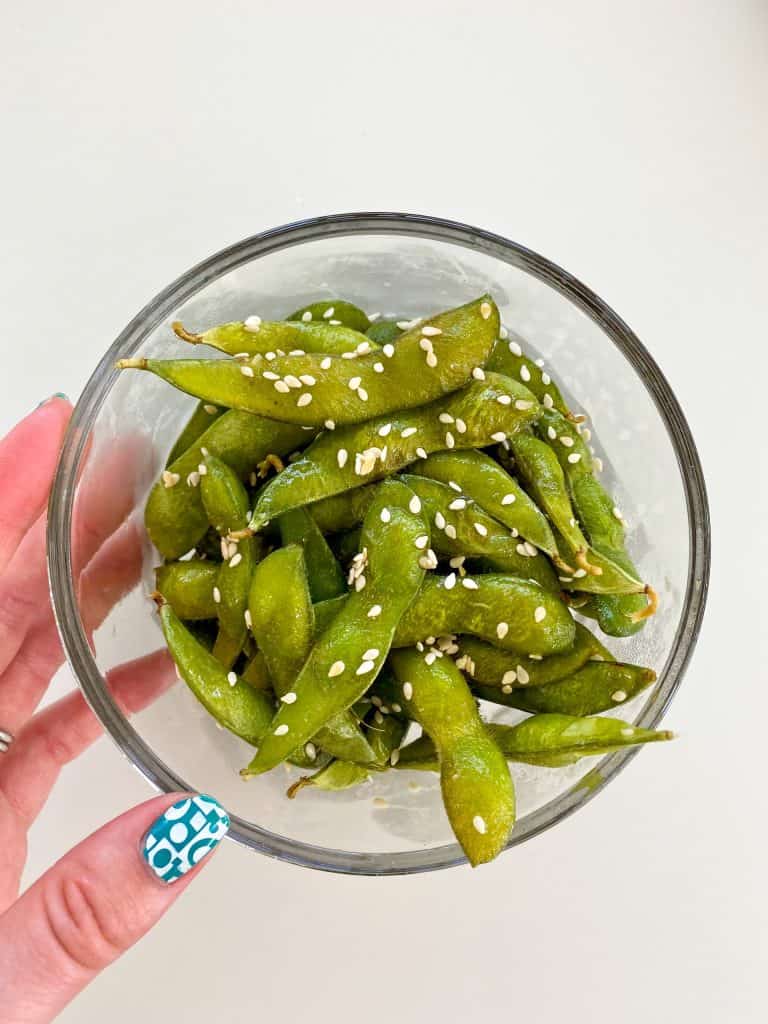
Edamame is a fantastic option if you are in search of a high protein, fibre-rich snack.
8. Applesauce with Greek Yogurt or Cottage Cheese
Top plain Greek yogurt or cottage cheese with homemade applesauce. Add one tablespoon of chia seeds for an additional 4 grams of fibre.
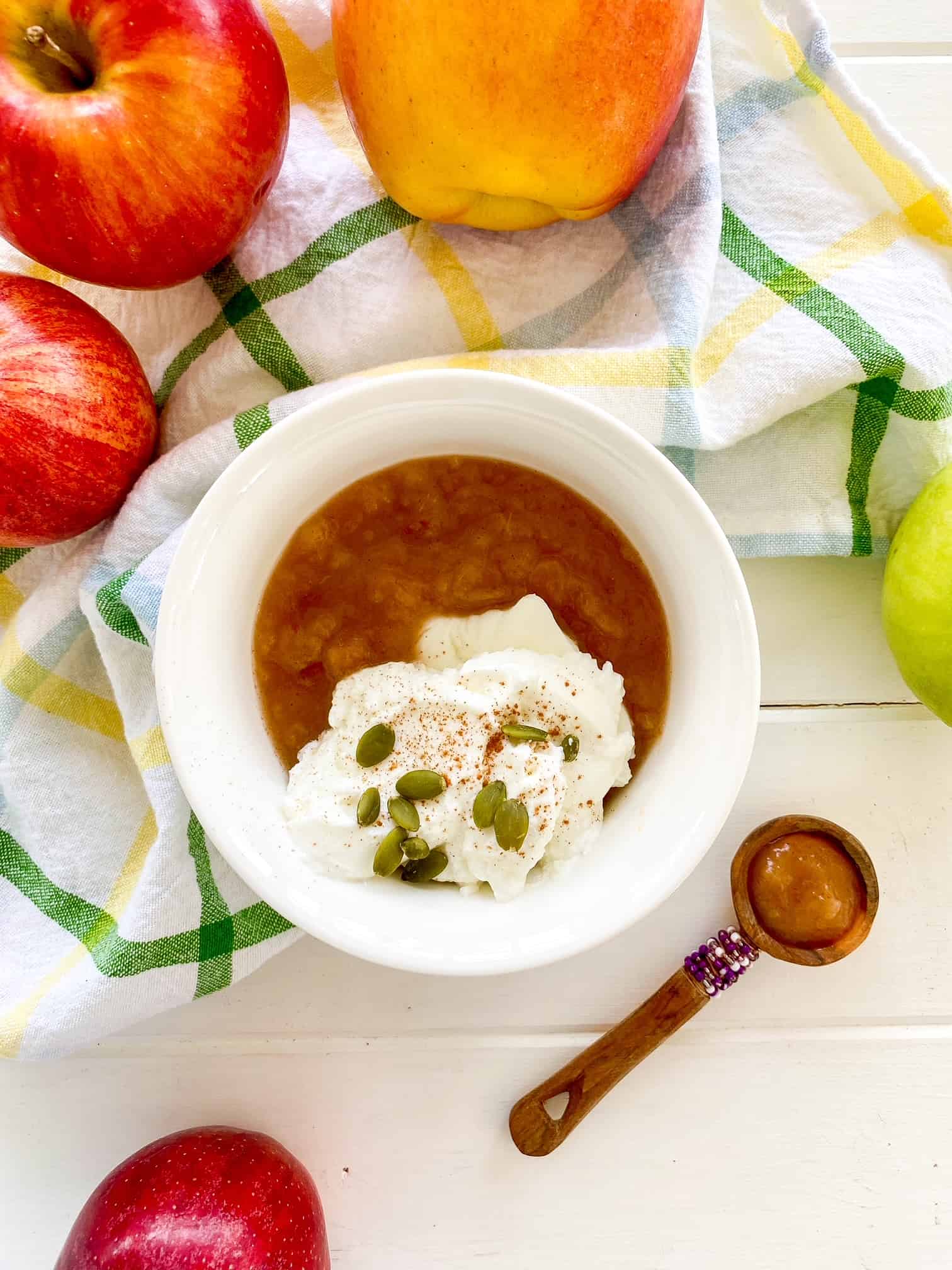
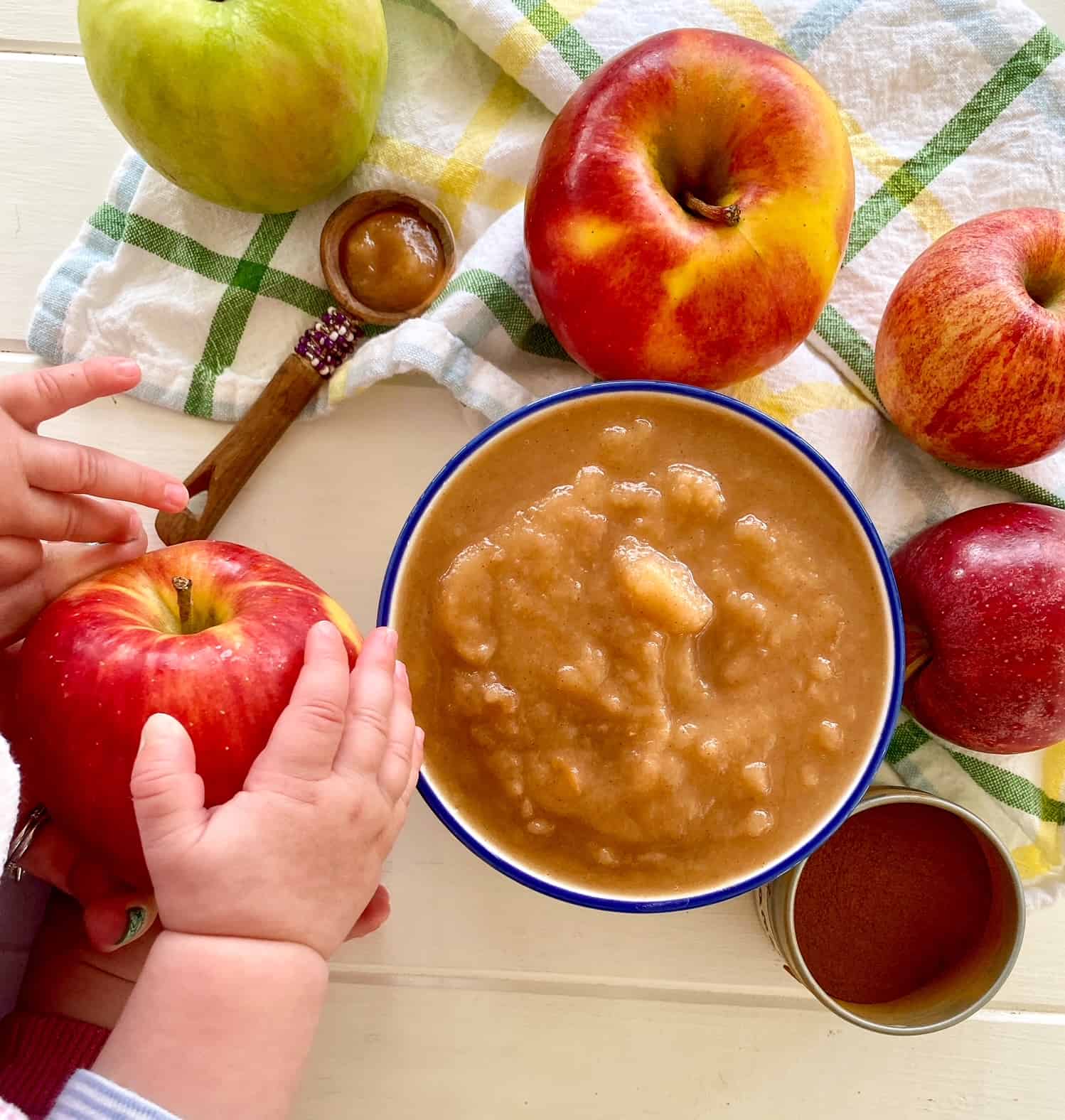
Try our Homemade Applesauce for a sweet and perfectly spiced addition to your yogurt snack.
9. Greek Lentil Salad
A savoury, make-ahead option that works well as a smaller snack portion. Lentils pair beautifully with feta, olives, and fresh vegetables. Portion into containers for convenient lunches or snacks.
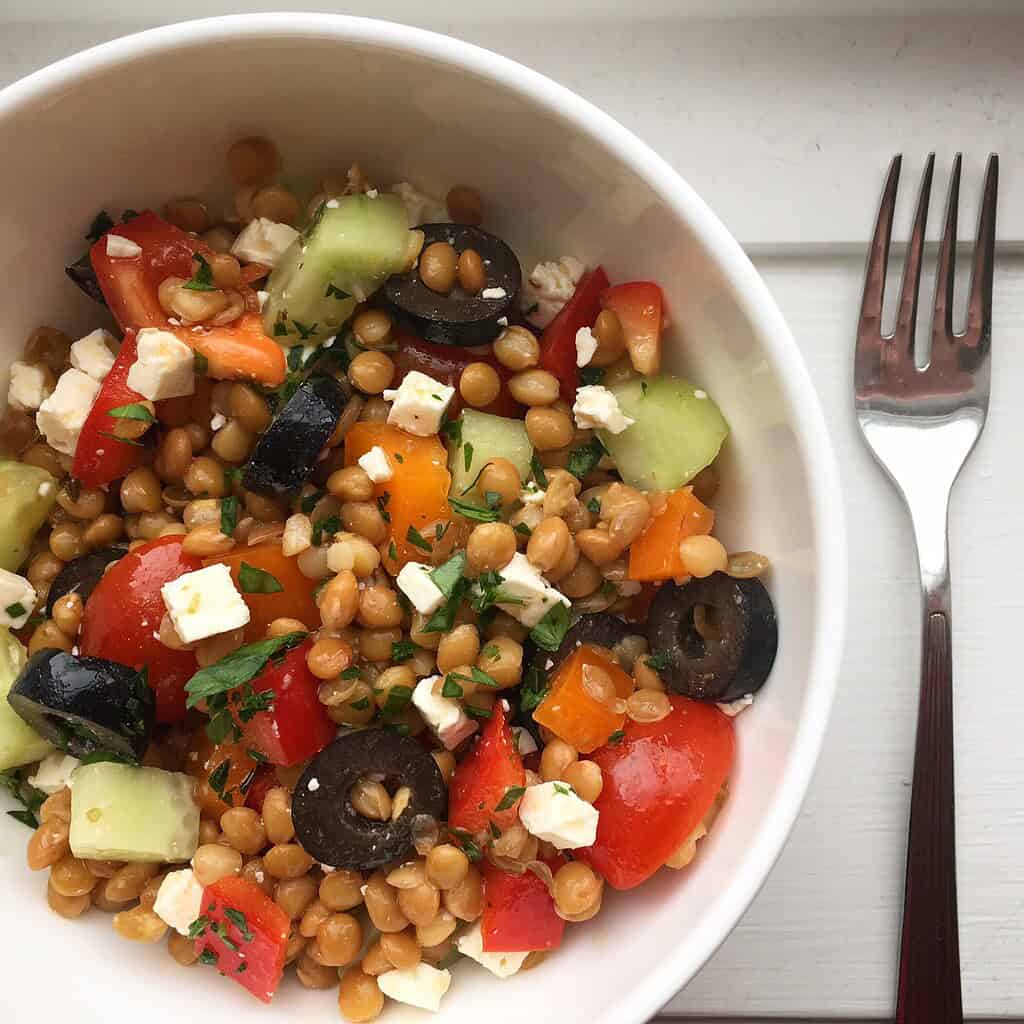
Try our Greek Lentil Salad for a hearty yet refreshing snack.
Dietitian Tips for Choosing Healthy Gluten-Free Snacks
- If buying prepackaged products, double-check that they are labeled gluten-free. In Canada, foods labeled gluten-free must contain less than 20 parts per million (ppm) of gluten and consequently they are safe for those with celiac disease.
- Watch for BROW (Barley, Rye, Oats not labeled gluten-free, and Wheat). These gluten-containing grains may appear under different names such as couscous, bulgur, or farro, but in Canada they must be listed in plain language on food labels.
- Plan ahead. Decide what you’ll make and when you’ll prepare it.
- Grocery shop mindfully. Write a list to ensure you have all necessary ingredients.
- Prep ahead. Wash and cut produce, portion snacks, and store them in advance.
- Make convenience a priority. Store snacks in reusable containers or grab-and-go bags.
- Involve kids in preparation to make snacks more enjoyable.
- Time snacks appropriately — aim for between meals when hunger begins.
- If snacking on the go, use ice packs or insulated bags to keep perishable foods safe.
Gluten-Free Snacks Bottom Line
Gluten-free snacking doesn’t have to feel limiting. With thoughtful planning and a few reliable go-to ideas, it can be simple, nourishing, and enjoyable. Finally, mix and match these options to stay energized and satisfied — no matter how busy life gets.
Ready to improve your health?
Related Topics

Andrea D'Ambrosio is a Registered Dietitian, health-enthusiast and adoring foodie. She started Dietetic Directions as a way to share science-based information mixed with inspirational content for lifelong change.
Book a Dietitian ConsultationRelated Recipes

Hi! I’m Andrea,
Dietitian, health-enthusiast and an adoring foodie. I started Dietetic Directions as a way to share science-based information mixed with inspirational content for lifelong change. I’m all about eating well and loving life.
Know More About Me